
Choosing a suitable bowl
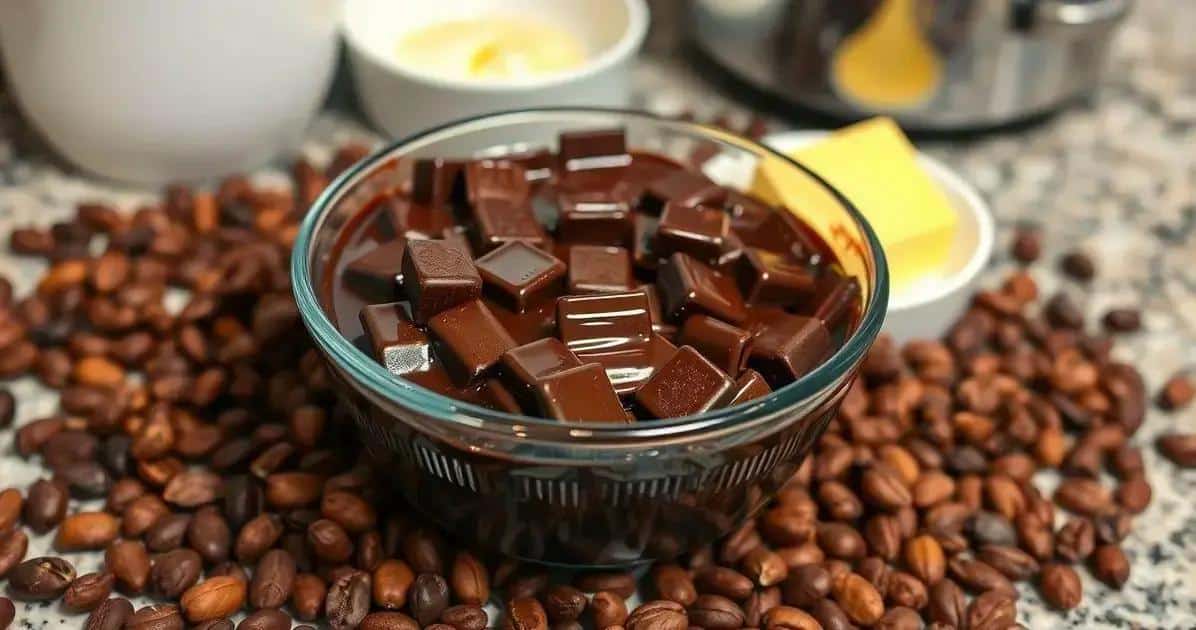
Use a completely dry microwave-safe glass or ceramic bowl. Check the appliance manual and avoid metal utensils or containers.
Chopping the chocolate
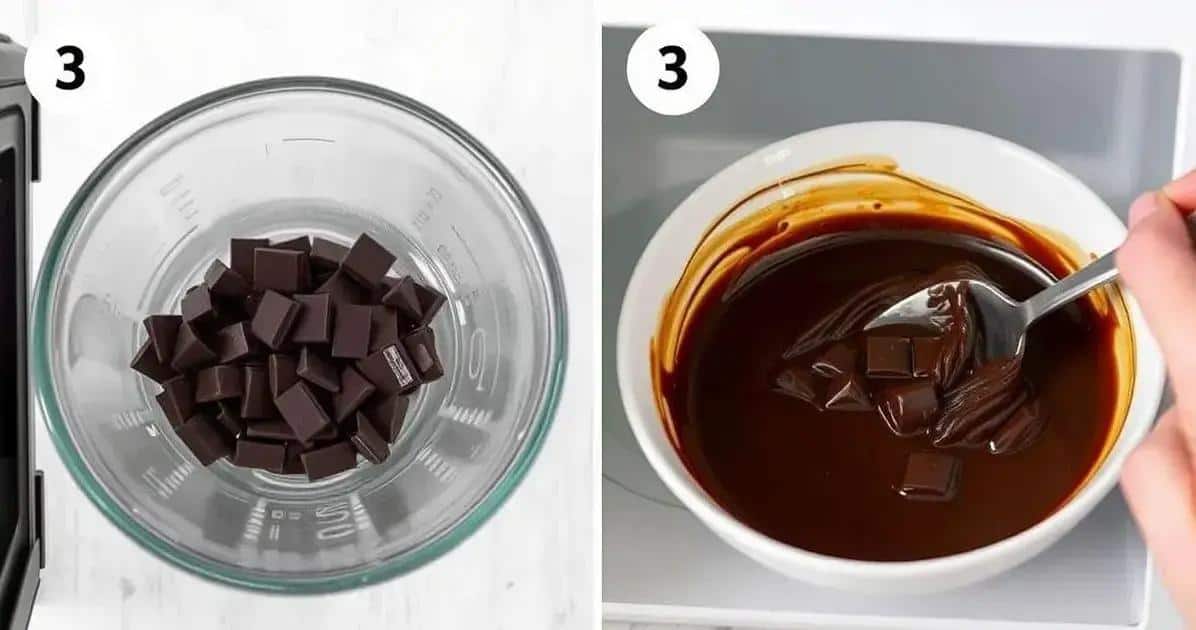
Chop the chocolate into small even pieces so they melt at a similar rate. Place no more than a manageable layer in the bowl.
Heating in short bursts
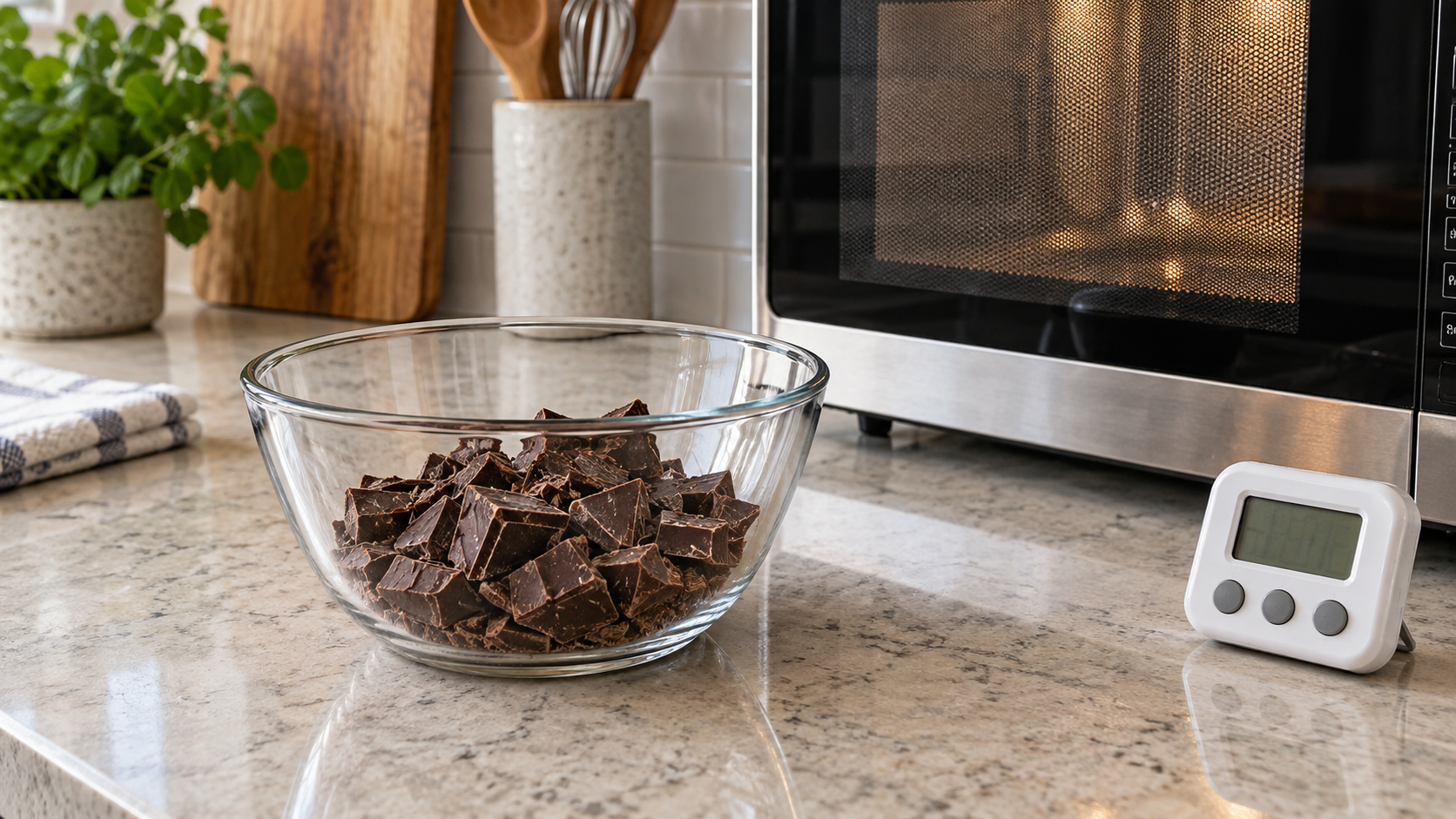
Heat at medium power for 20 seconds, then stir. Repeat in 10–15 second bursts as the chocolate begins to soften.
Stirring with residual heat

Stop while a few small pieces remain and stir until residual heat melts them. This reduces the risk of scorching, especially with milk or white chocolate.
Avoiding water and scorching
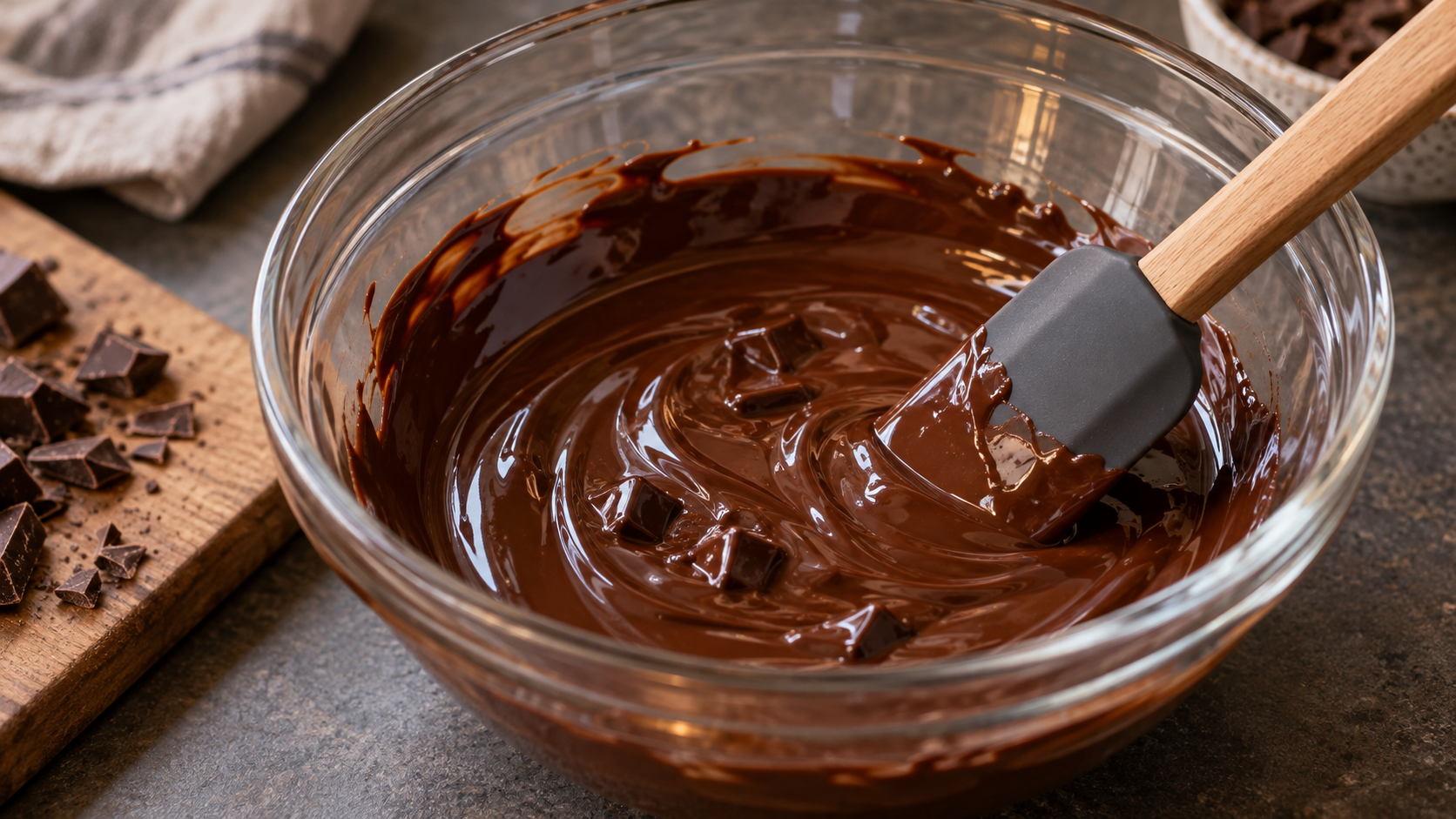
Keep steam and water away because even a small amount can make chocolate seize. A bowl that feels very hot is a sign to stop immediately.
Using melted chocolate
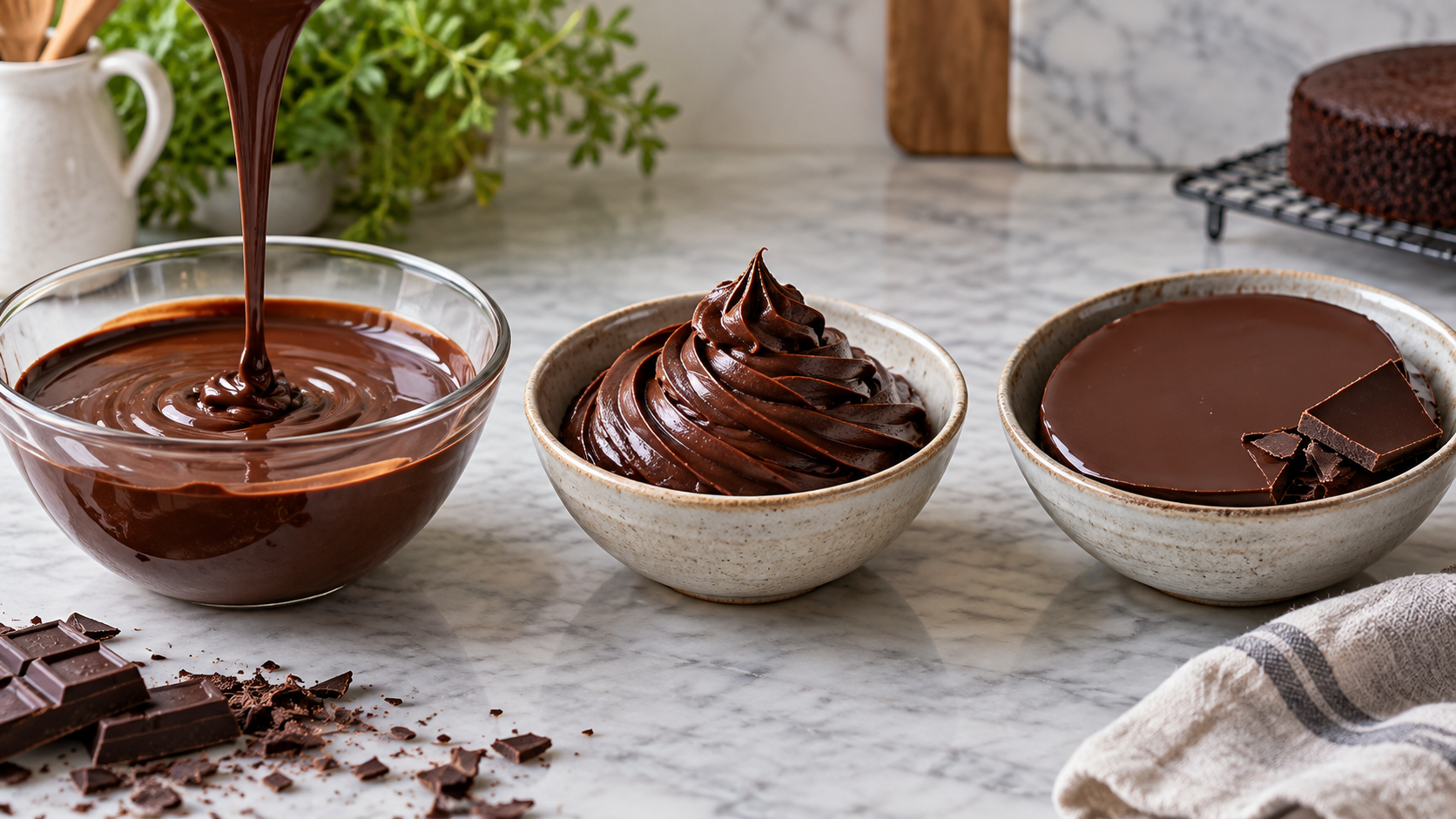
Use promptly for ganache, drizzles or baking. Microwave melting alone does not temper chocolate, so temper separately when shine and snap matter.
Frequently asked questions
Can it be prepared ahead?
Yes. Prepare stable components ahead and follow the chilling and storage instructions in the method.
Can I change the chocolate?
Yes, but cocoa percentage changes sweetness and firmness, so adjust one element at a time and test a small batch.
How should it be stored?
Refrigerate anything containing fresh cream, milk or other perishable ingredients and keep it covered.
Can I reduce the sugar?
A modest reduction may work, although sugar can affect texture and moisture as well as sweetness.
Which allergens should I check?
Check labels for milk, eggs, gluten, soya, nuts and any allergens in toppings or packaged ingredients.
What gives the best result?
Measure accurately, use gentle heat and follow the texture cues rather than relying only on the clock.