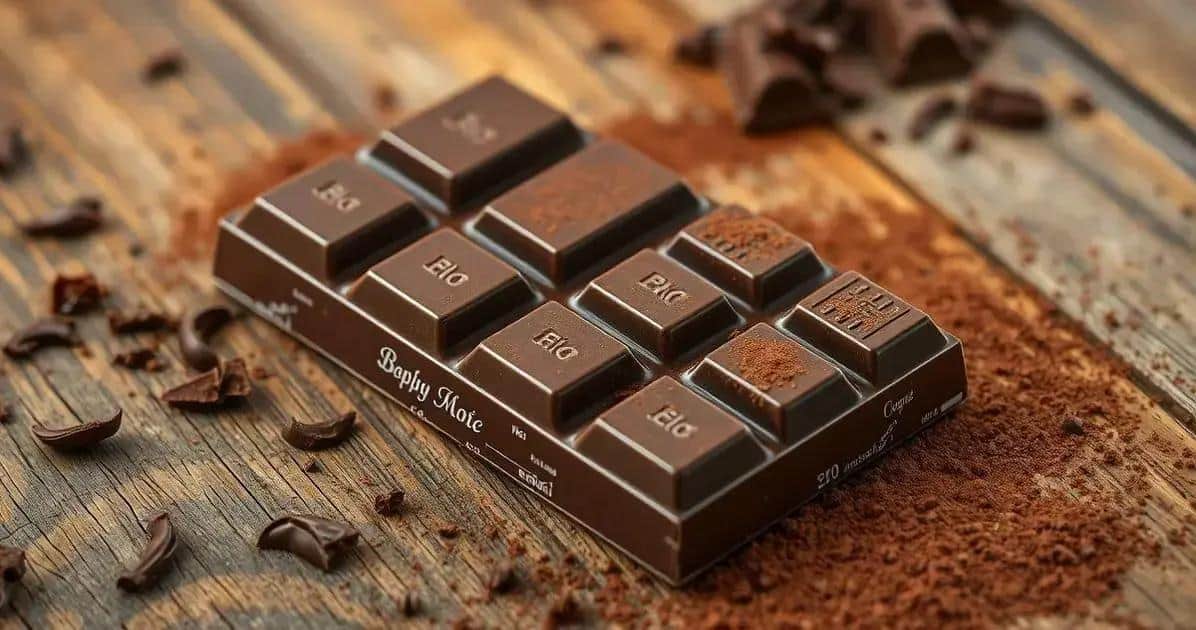

Two types of bloom

The pale film on chocolate is usually bloom. It may look unattractive, but bloom alone is different from mould and is normally caused by changes in fat crystals or by moisture dissolving surface sugar.
Recognising fat bloom

Fat bloom often looks streaky or grey and may feel smooth. It can result from poor tempering, repeated temperature changes or fat migrating from a soft filling.
Recognising sugar bloom
Sugar bloom tends to feel rough or dusty. It appears when condensation dissolves sugar on the surface and the water later evaporates, leaving crystals behind.
Storing chocolate correctly
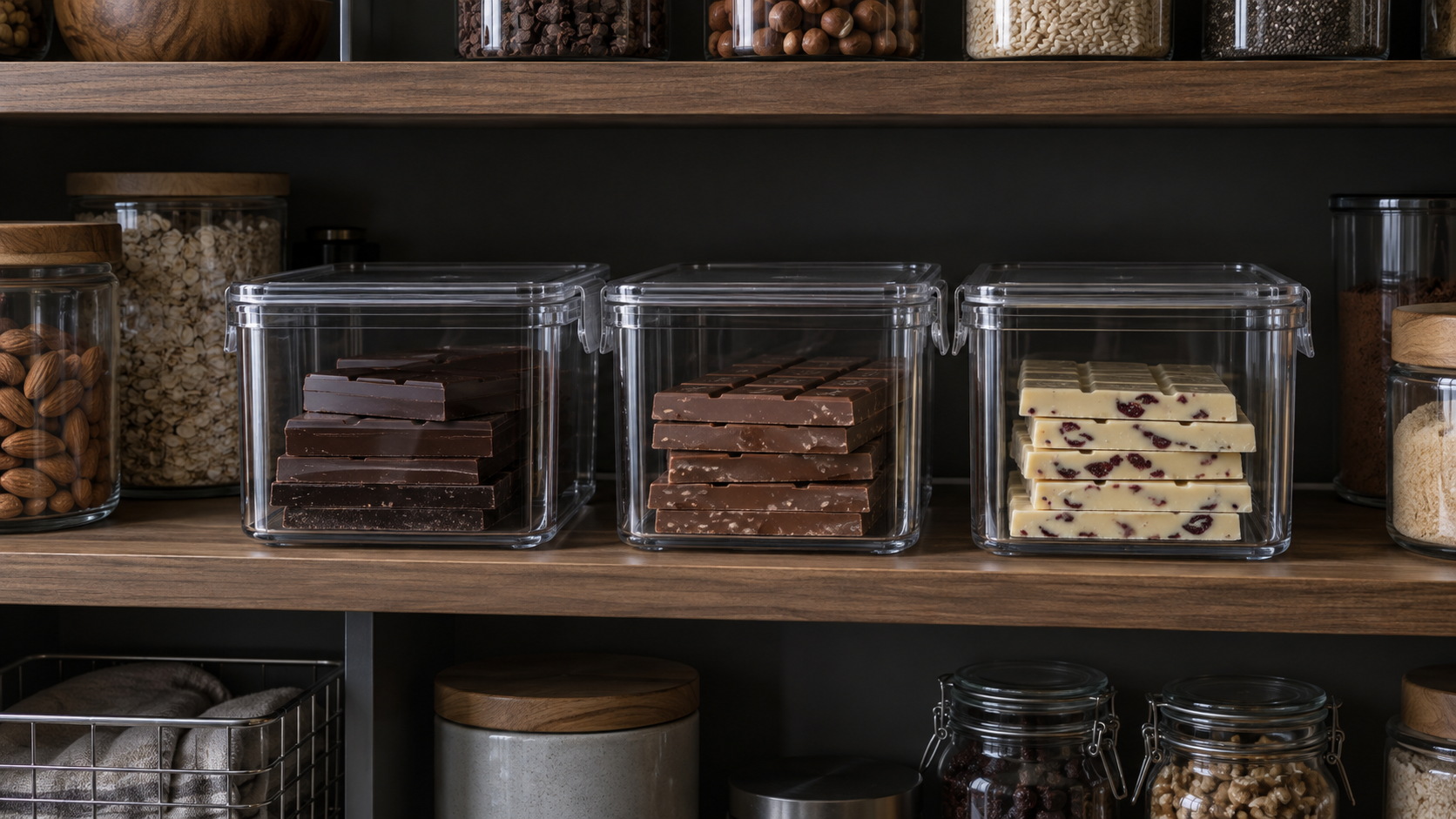
Keep chocolate tightly wrapped in a cool, dry, odour-free place with a stable temperature. If refrigeration is unavoidable, seal it well and let the unopened package reach room temperature before opening.
Using bloomed chocolate
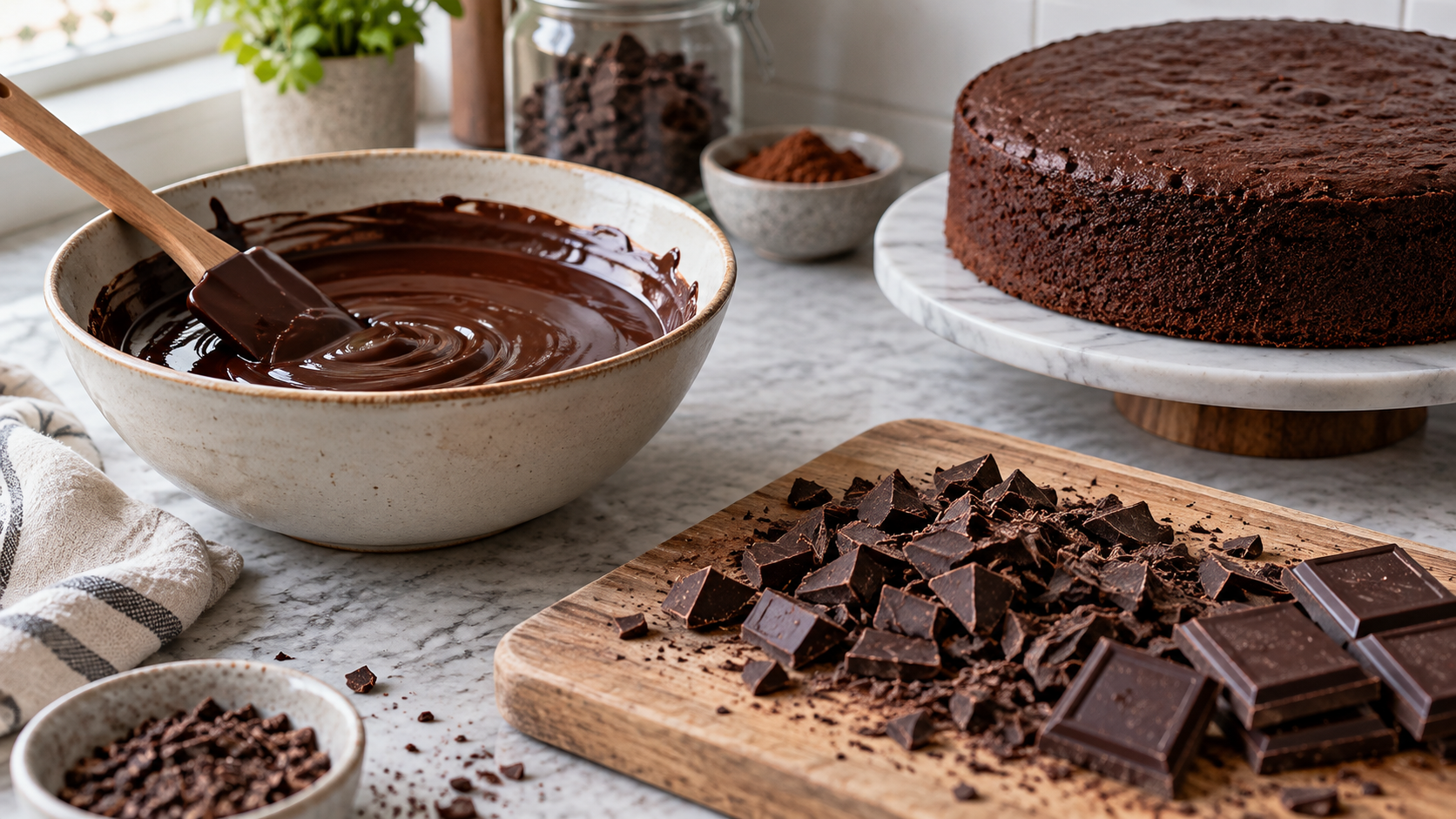
Plain bloomed chocolate can usually be melted and used in baking if it smells and tastes normal. Discard it if there is visible mould, an off smell, contamination or uncertainty about storage.
Preventing the problem

Temper couverture correctly, avoid humid work areas and protect finished pieces from sudden temperature changes. Choose fillings with suitable shelf life and water activity for confectionery.
Frequently asked questions
Can I prepare it ahead?
Yes. Follow the chilling and storage guidance in the method and add crisp decorations shortly before serving.
Can I change the chocolate?
Yes, but cocoa percentage changes sweetness, flow and firmness, so test a small quantity first.
How should it be stored?
Keep plain chocolate cool and dry, and refrigerate desserts containing cream, milk or cut fruit.
Can I reduce the sugar?
A modest reduction may work in some recipes, although sugar also affects texture and structure.
Which allergens should I check?
Check every label for milk, gluten, soya, eggs, nuts and any other allergens relevant to the ingredients used.
What gives the most reliable result?
Measure accurately, control temperature and use the visual texture cues described in each step.