
Start with the right chocolate

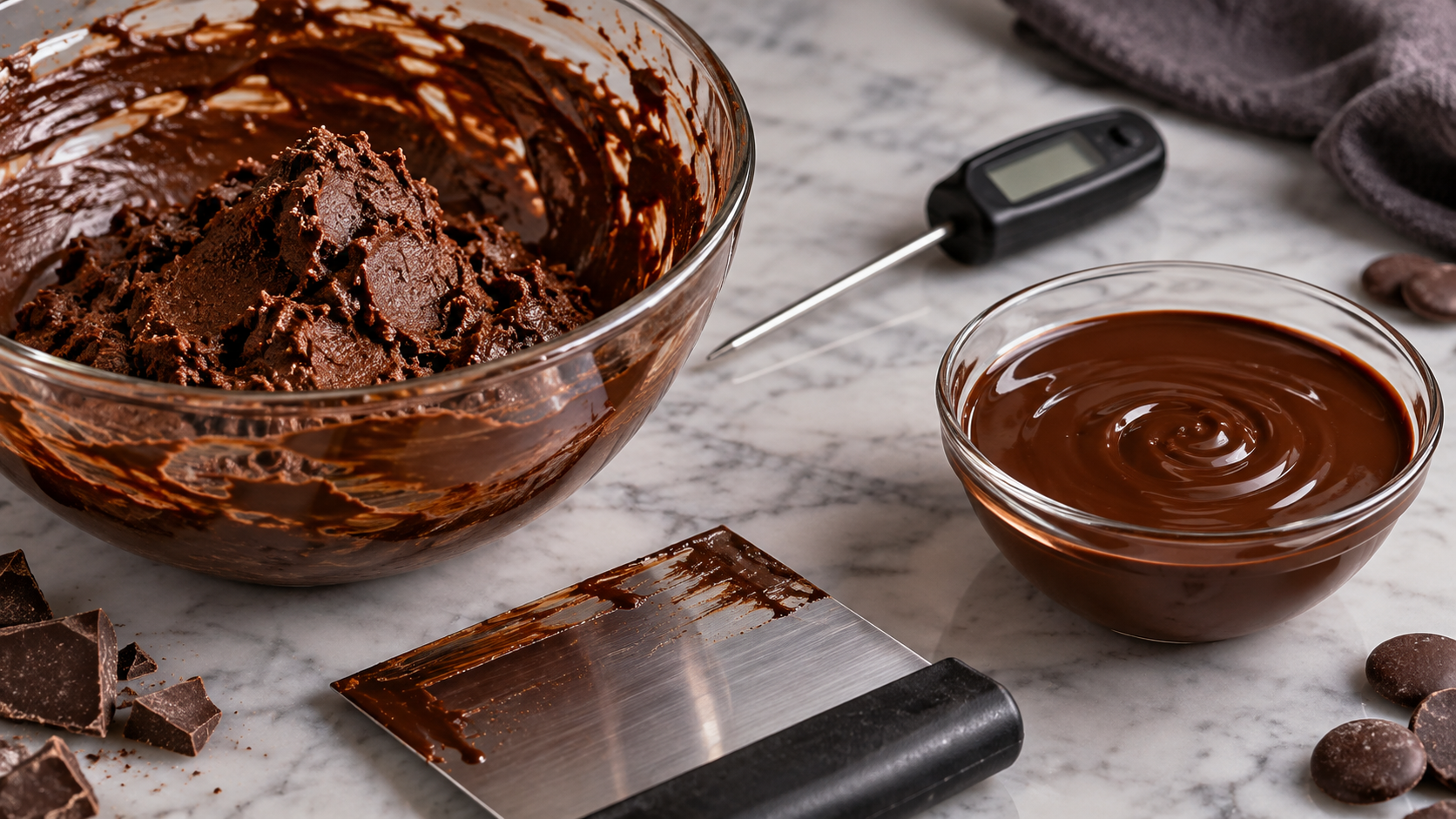
Use couverture chocolate with enough cocoa butter to flow cleanly. Compound coating can set firmly, but it will not behave or taste exactly like tempered couverture.
Keep equipment dry
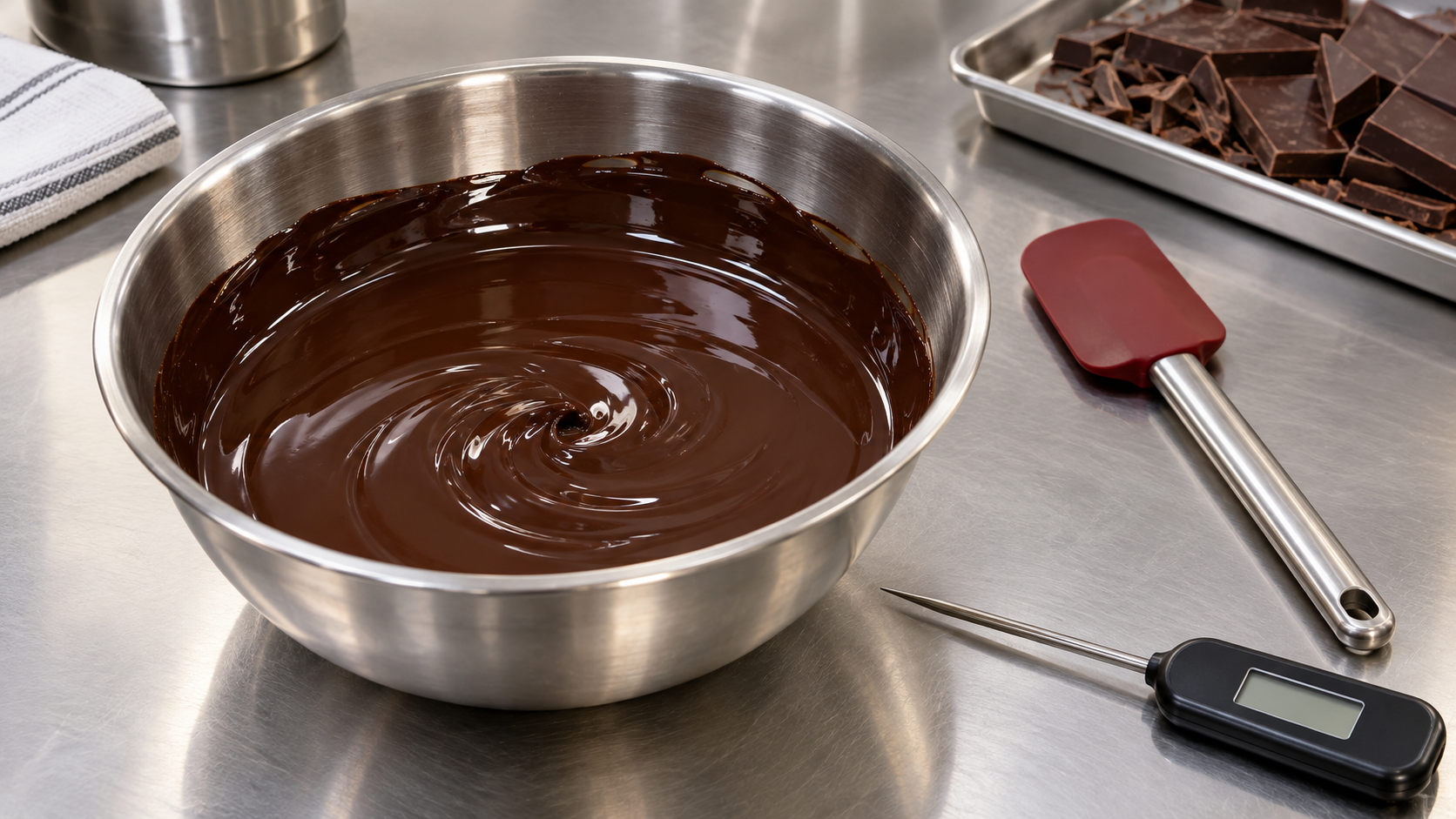
Water makes melted chocolate seize and condensation dulls the finish. Dry bowls, tools and moulds completely and work in a cool, low-humidity room.
Temper accurately

Follow the temperature curve recommended for the chocolate you are using. As a common guide, dark chocolate is melted to 45–50°C, cooled to 27–28°C and worked at 31–32°C; manufacturer guidance takes priority.
Prepare the moulds
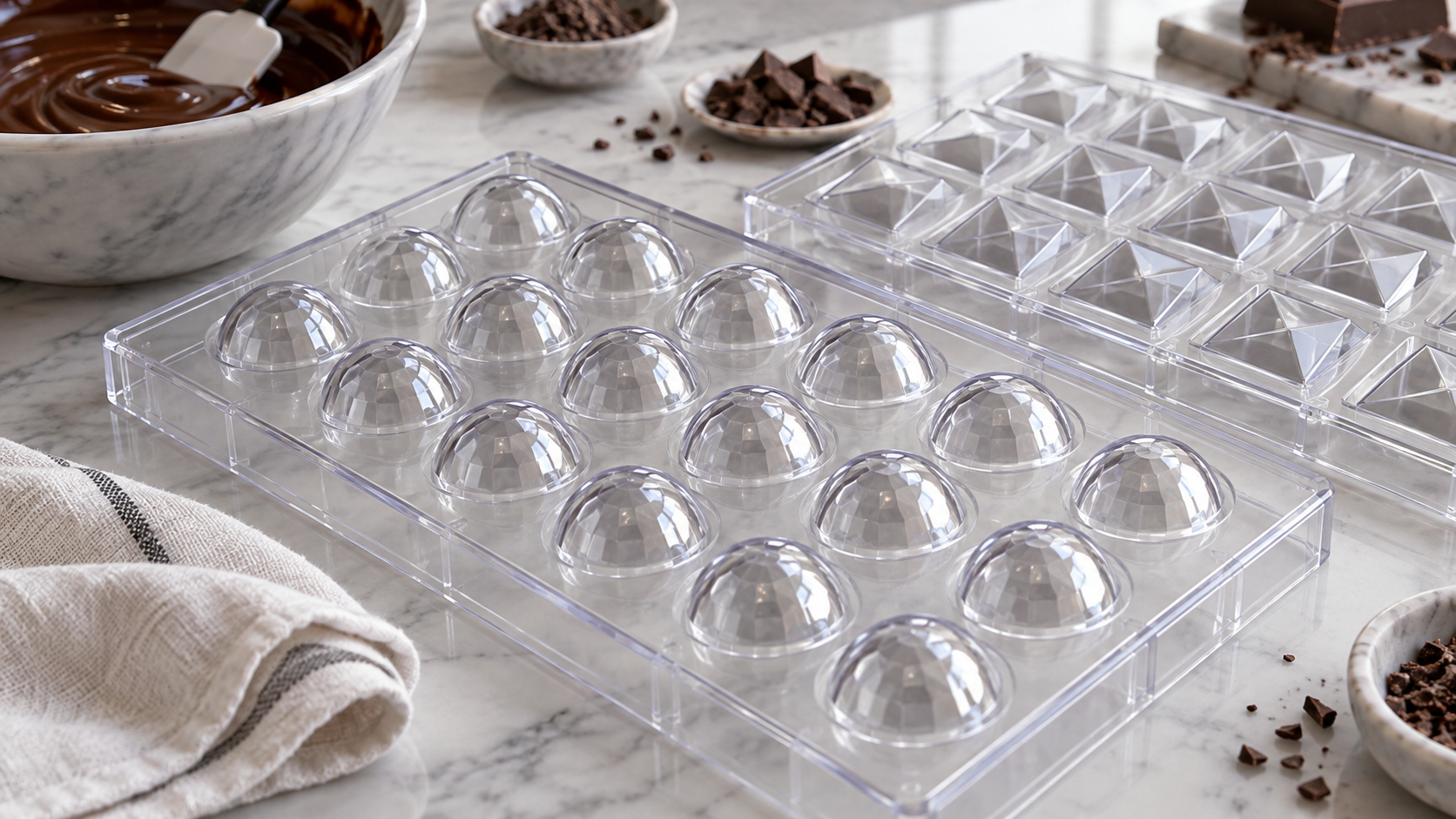
Polish rigid mould cavities with clean lint-free cotton. Avoid grease, detergent residue and scratched moulds, all of which can mark the finished surface.
Fill without air pockets

Pour tempered chocolate into the mould, tap gently to release trapped air and scrape the surface clean. Allow it to crystallise at cool room temperature and release only when it has contracted from the mould.
Frequently asked questions
Can I prepare it ahead?
Yes. Follow the chilling and storage guidance in the method and add crisp decorations shortly before serving.
Can I change the chocolate?
Yes, but cocoa percentage changes sweetness, flow and firmness, so test a small quantity first.
How should it be stored?
Keep plain chocolate cool and dry, and refrigerate desserts containing cream, milk or cut fruit.
Can I reduce the sugar?
A modest reduction may work in some recipes, although sugar also affects texture and structure.
Which allergens should I check?
Check every label for milk, gluten, soya, eggs, nuts and any other allergens relevant to the ingredients used.
What gives the most reliable result?
Measure accurately, control temperature and use the visual texture cues described in each step.